Most people are familiar with land trusts as community-based organizations that work to permanently protect natural, scenic, historic, or agricultural land, often in partnership with private landowners. But did you know that they can also play a key role in advancing wildlife corridors and crossing structures?
Across the U.S., land trusts are doing their part to ensure habitat connectivity for wildlife. Whether it’s securing properties that conserve migration corridors, establishing conservation easements, or writing guidelines or partnering with local and state officials to help install wildlife crossings, these organizations are moving the needle on connectivity conservation nationwide.
For example, the Peninsula Open Space Trust (POST), based in Palo Alto, California, is creating a network of permanently protected lands across three counties. One of their focus areas is a Wildlife Linkages Program that recognizes the importance of keeping wildlife on the move by reducing habitat fragmentation due to human development.
POST has conducted studies, purchased property, and collaborated with partners on projects that advance the building of wildlife crossing structures. One of their priority locations is the critical Coyote Valley landscape where they are working to reconnect one of the last remaining large, undeveloped valley floors along California’s western coast. They also partnered on a study that assessed ecological connectivity between the Santa Cruz Mountains, Diablo Range, and Gabilan Range and identified sites where new or improved crossing structures, habitat restoration or land protection may be needed to ensure wildlife movement.
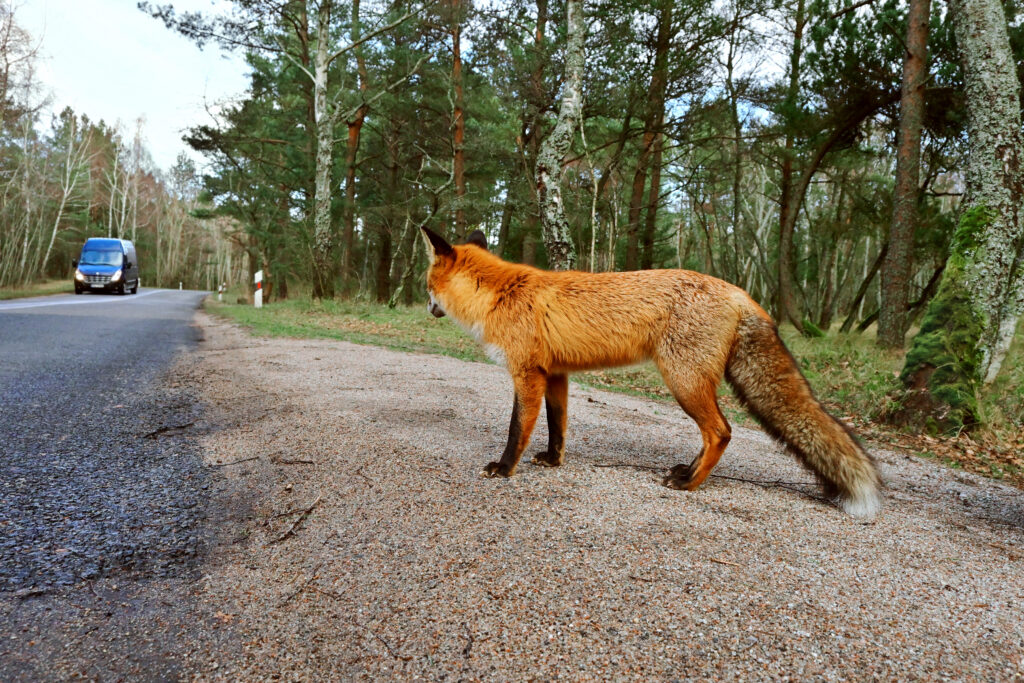
Here are FIVE REASONS land trusts are important partners in planning wildlife crossings and enhancing habitat connectivity:
- For wildlife habitat to be sufficiently connected, it often requires private land protections. Many land trusts contribute to reconnecting habitat through conservation easements or acquisitions of key parcels in landscape linkages. Private land conservation and stewardship efforts are especially important where there are pinch points—like a narrow strip of private land between two areas of conserved habitat—in a landscape that could otherwise block wildlife from moving throughout the area if the land is not conserved.
- Private land protection is important for the construction of wildlife crossing structures. When determining where to invest in and build wildlife crossing structures, decisionmakers often prefer that land on both sides of the proposed site is protected so that it remains viable as wildlife habitat in perpetuity. If land trusts are working to conserve key linkages on private land, a proposed wildlife crossing structure is much more likely to be considered a sensible public investment.
- Landowners and land trusts can help steward local improvements to private land adjacent to bridges and culverts under roads. Existing bridges, culverts, and tunnels installed for water flow can also serve as wildlife crossing structures. Wildlife use of existing structures can be significantly increased with appropriate management and modifications nearby and within the structure. For example, a dry ledge can be added to the edge of the structure for non-aquatic species to walk on. Doing so can reduce the barrier effect of a roadway without the cost associated with constructing new crossings.
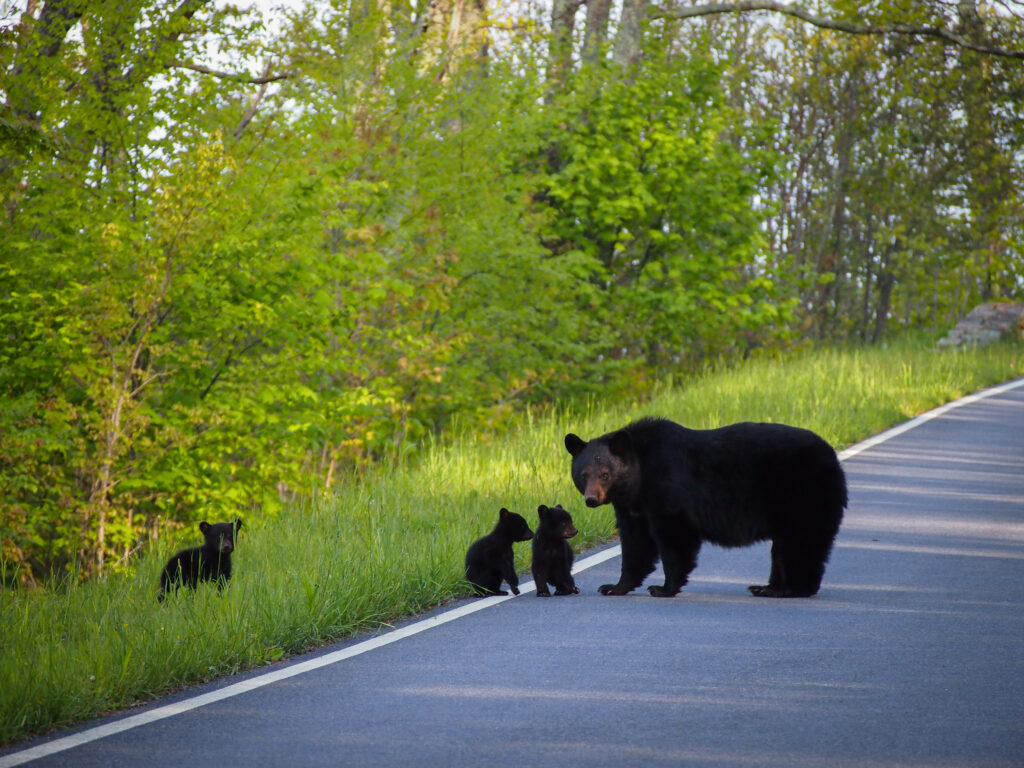
A mother bear and her cubs cross a road. Credit: Adobe Stock - Land trusts are valued partners in projects and coalitions working on connectivity and crossings. Coalitions focused on habitat connectivity and crossing projects bring together multiple stakeholders to help address wildlife-vehicle collisions and connectivity problems in high-risk locations. Land trust organizations understand land markets and local sentiment, have a local base of support and key relationships, and can provide useful information for identifying land parcels to maximize conservation outcomes. With land trust involvement, a coalition is usually better prepared to act on unique private land conservation opportunities as they arise.
- Conservation easement language can make a big difference. While drafting a conservation easement, if the land is adjacent to a roadway, it is helpful to consider whether a wildlife crossing structure may be proposed in the area in the future. Conservation easement language can be crafted so that habitat connectivity conservation is recognized as a purpose of the easement and use limitations can ensure future activities will not negatively impact the easement’s purposes.
The Center for Large Landscape Conservation is currently working with Wood River Land Trust (WRLT), an Idaho-based organization, to develop the Blaine County Wildlife-Vehicle Conflict Assessment and Long-Range Mitigation Plan. The goal of this collaboration is to make highways safer for people and wildlife and preserve habitat connectivity. CLLC analyzed data to identify sites where mitigation, like crossing structures, is needed. In partnership with WRLT and other local, state and federal partners, CLLC evaluated potential solutions and developed recommendations to guide future transportation planning and investments that reduce wildlife-vehicle collisions while maintaining wildlife movement. WRLT’s leadership has brought this issue to the forefront, and this project and its future implementation would not have happened without them.
A Resource for Land Trusts and their Partners
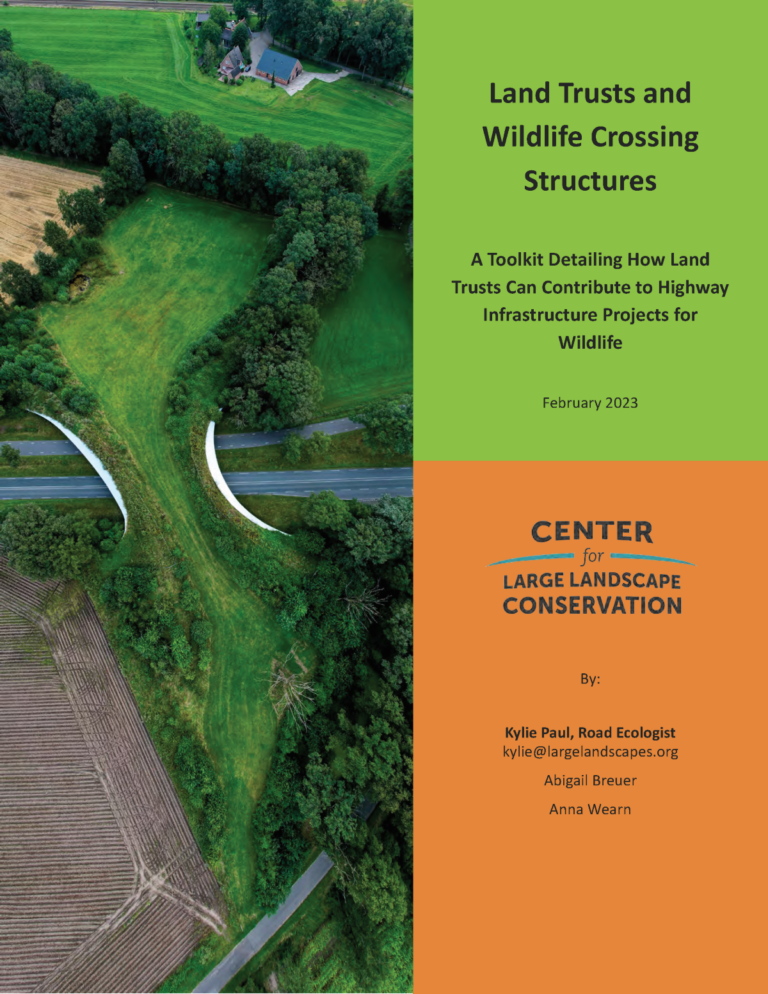
Land trusts that wish to get more involved in conserving habitat connectivity and advancing wildlife crossings can make use of resources like the Land Trusts and Wildlife Crossing Structures toolkit that CLLC created with input from numerous land trusts across the nation. This resource is a compilation of lessons learned and best practices in action by land trusts engaged in connectivity conservation and wildlife crossing structure projects.
In addition to the specific recommendations and examples from communities around the U.S. highlighted in the toolkit, there is also advice offered from land trusts who are already engaged with this work:
- Approach these efforts with a learning mindset—don’t shy away if you do not have the expertise, as most people or organizations do not have all the answers. But this kind of work needs to happen.
- No one group or agency can do these projects alone. Coalitions and relationships are the key. We can learn from each other—try to find out what other land trusts have done in these efforts. Establish a network.
- This is a long game—early involvement can pay off in the long run, and land trusts have an important role in different phases and different moments in the process.
The Center for Large Landscape Conservation would like to further understand what may help land trusts, road ecologists, and implementers better work together in these projects, so please get in touch with us (kylie@largelandscapes.org) with any questions, examples, or details. We would love to hear from you!
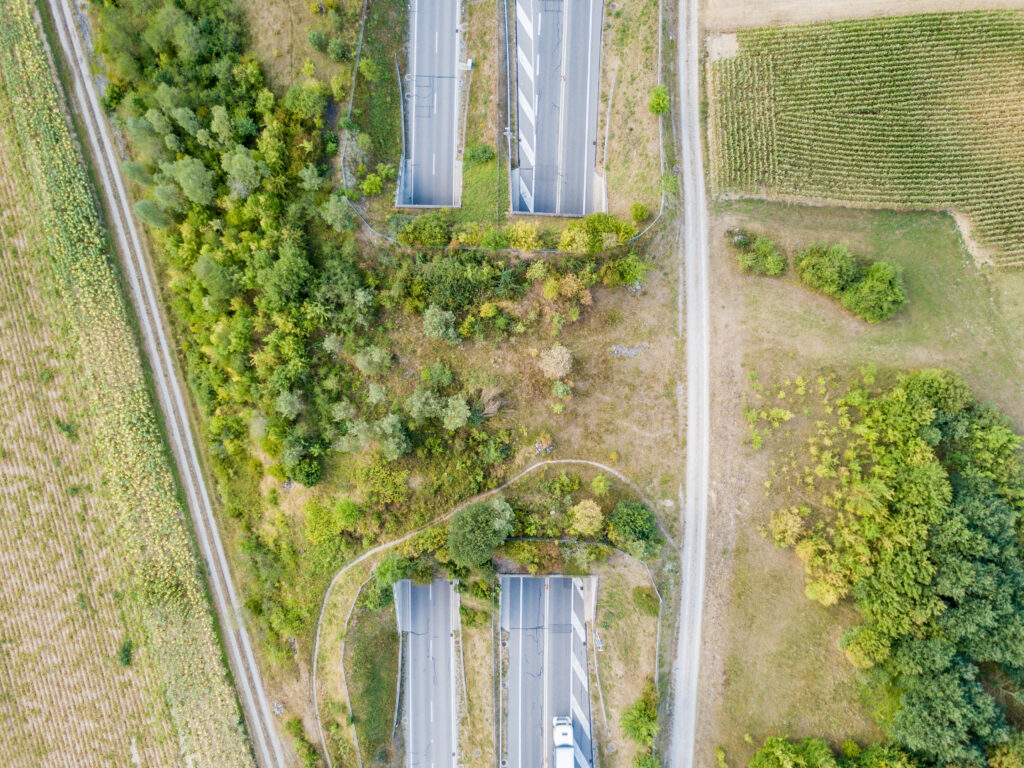
Top Image: A wildlife crossing spans a four-lane highway. Credit: Adobe Stock