It’s the end of a scorching day in the desert, and the setting sun casts orange rays that sear the eyes of drivers navigating eight lanes of rush-hour traffic on US-101 in Los Angeles. This steady stream of cars creates a solid barrier across the landscape, making it extremely difficult for wildlife—like mountain lions—to cross.
But one resilient mountain lion did make it across.
P-22, a male mountain lion from the Santa Monica range successfully navigated the maze of cars and found himself in Griffith Park in Los Angeles. He lived there for more than 10 years, occupying the smallest home range—roughly eight square miles— that has ever been recorded for an adult male mountain lion. Though he was able to survive, P-22 was never able to find a mate in his limited home range.
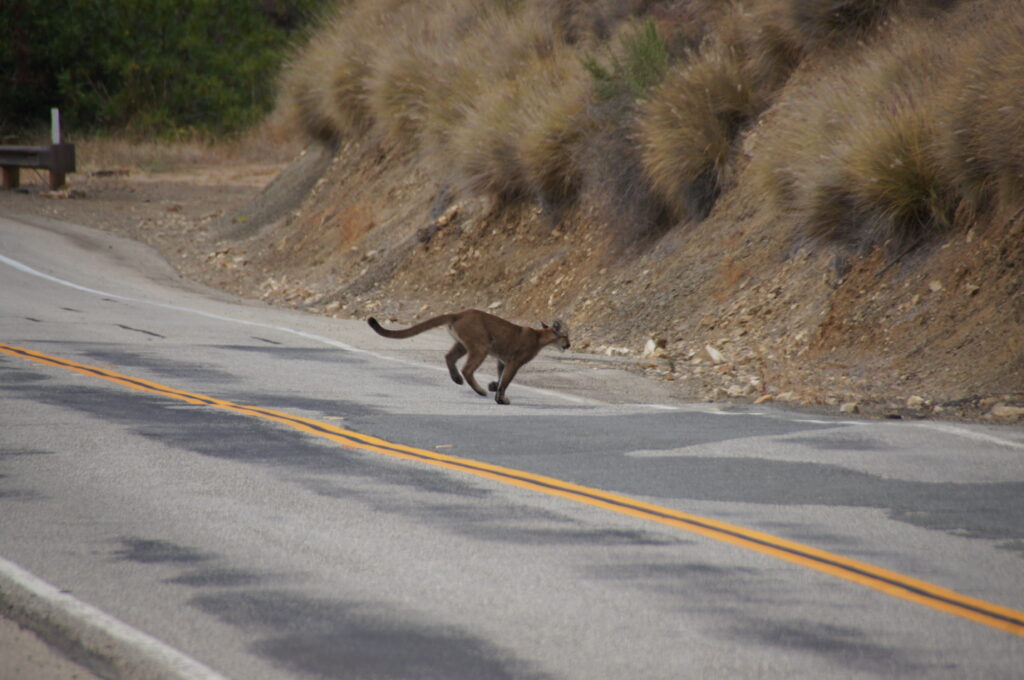
P-22 was euthanized in December of 2022 after officials captured him and discovered injuries from a vehicle collision and other chronic conditions. The life of this tough feline became a rallying cry to raise funds for the Wallis Annenberg Wildlife Crossing being built over US-101 to restore habitat connectivity. This busy road was one that P-22 had to cross on his way to Griffith Park, and it is the primary cause of genetic isolation—which has led to inbreeding— of the Santa Monica Mountains mountain lion population.
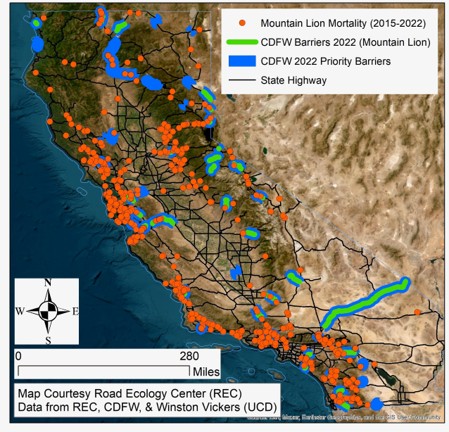
It is highways like US-101 and other human development paired with natural features like mountain ranges that have separated populations of mountain lions in California into six distinct genetic populations. A few of these populations live in the Central Coast region, spanning the area between San Francisco Bay and Los Angeles, which provides large swaths of habitat for mountain lions and other wildlife. However, this area is becoming increasingly fragmented and isolated from other healthy and more stable populations of these cats in the Sierra Nevada.
“Preserving and restoring connectivity in this region and reconnecting it across highways like US-101 to the Sierra Nevada is essential to prevent genetic isolation and keep regional ecosystems, like those in the Central California coast—which rely on apex predators to maintain biodiversity—from collapsing,” said Greg Costello, U.S. Connectivity Program Director with the Center for Large Landscape Conservation.
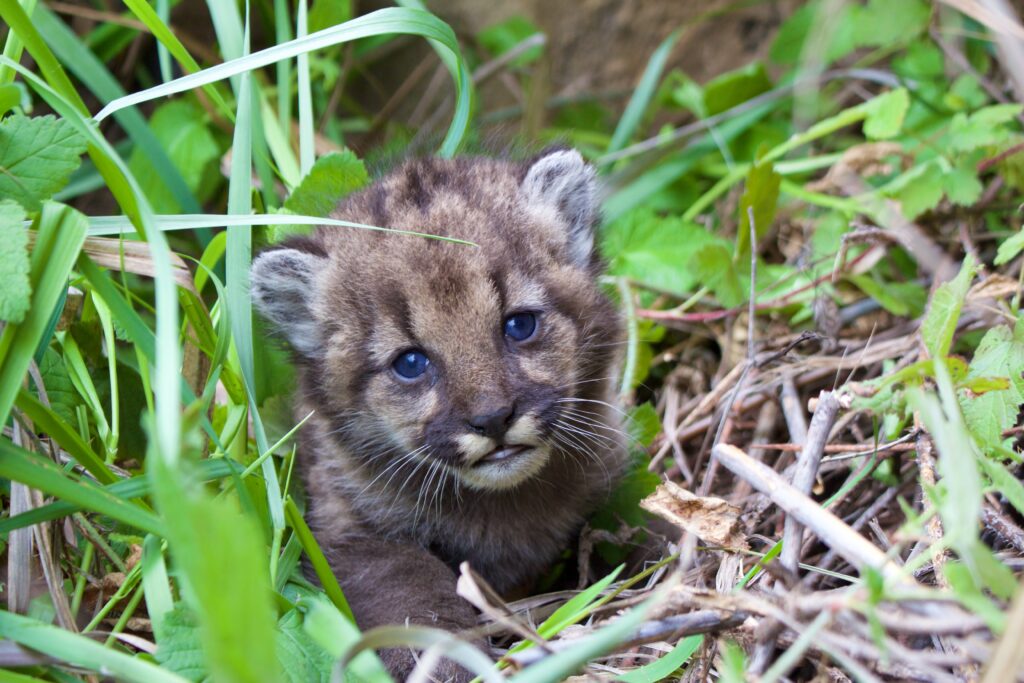
On February 12, 2026, the California Fish and Game Commission voted to list certain population segments of mountain lions in Southern and Central California as threatened under the California Endangered Species Act. The listing gives protections, among others, to the southern California Central Coast mountain lion Distinct Population Segments (DSP) due to concerns that they could become extinct in the foreseeable future due to fragmented habitat, barriers to movement, and displacement by humans.
“As development in the area increases, it is urgent to protect threatened mountain lion populations in California to preserve biodiversity in the region and protect local ecosystems,” Costello said. “These big cats need to move to find food and mates, and dense networks of communities and roads can limit their movement, reducing gene flow.”
California Mountain Lion Populations
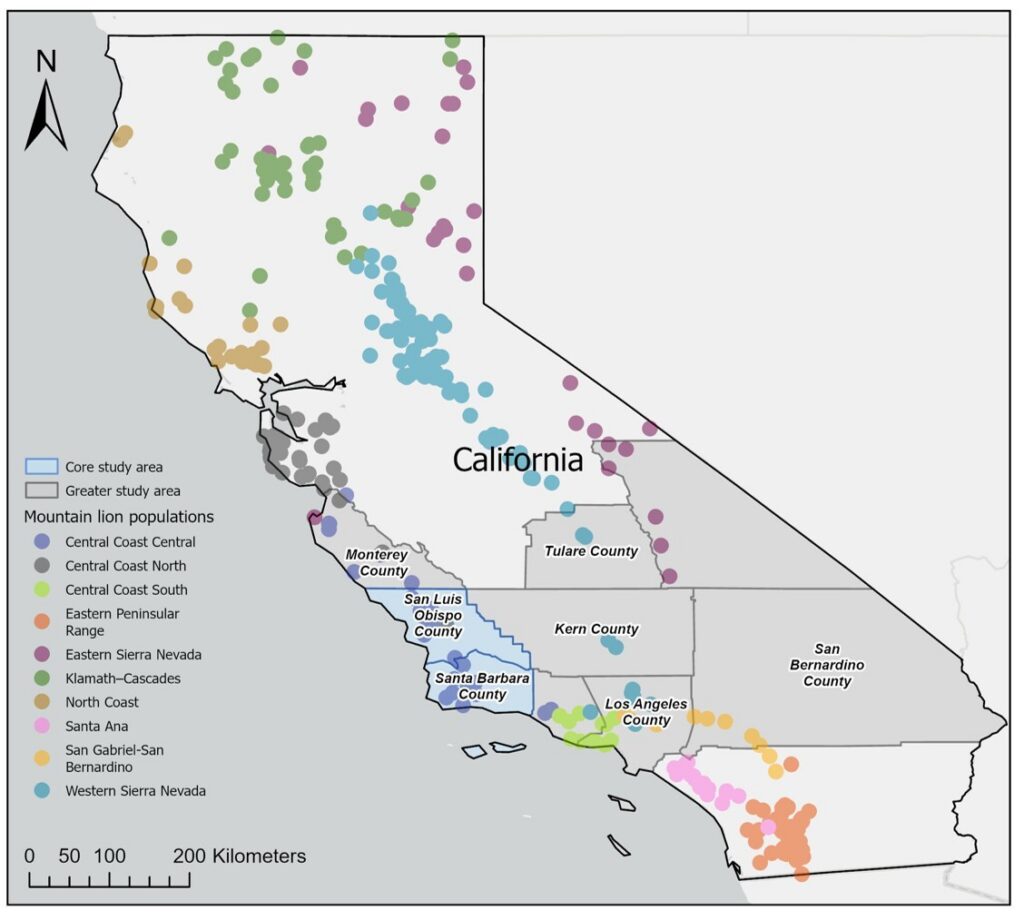
CLLC is beginning work with California Department of Fish & Wildlife, California Department of Transportation, Santa Barbara County (and City), San Luis Obispo County, and other partners in California’s Central Coast region to restore connectivity and safeguard mountain lions and other wildlife.
The Central California Coast Connectivity Project will identify wildlife movement corridors by combining advanced habitat connectivity mapping and modeling. The results will help guide county and municipal governments and land use planners in preserving these important areas, potentially creating a model for use in other parts of the state. CLLC will begin science assessments this fall with a goal of completing the data analysis to present to stakeholders in the region next fall.
Understanding the habitat needs and movement patterns of these cats, and other wildlife, is the critical first step toward securing the future for diverse and healthy wildlife populations along the Central California Coast.
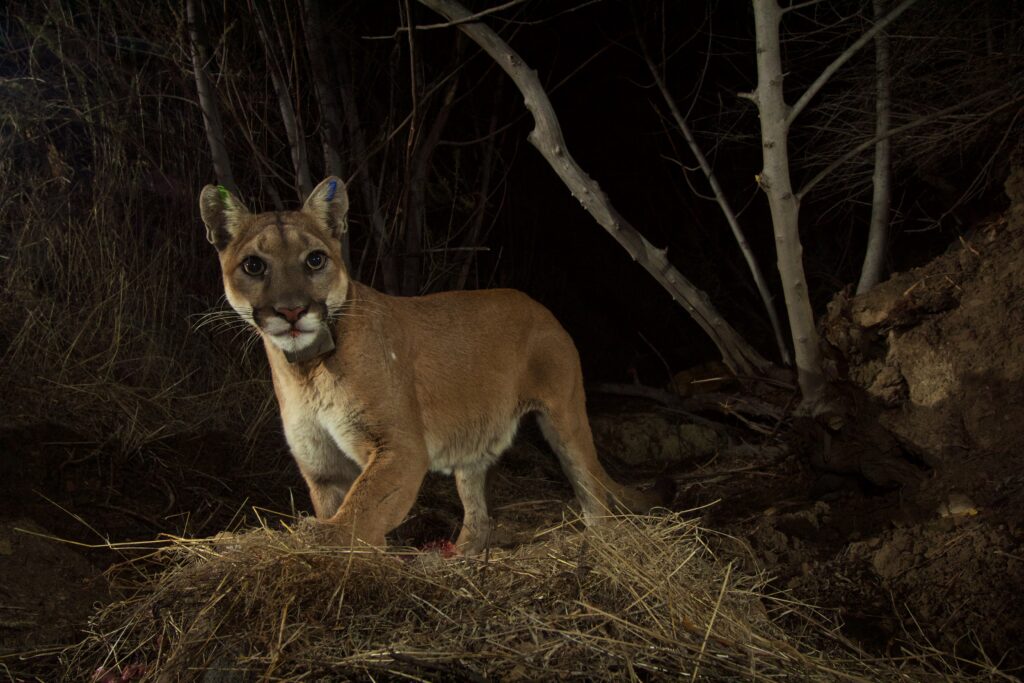
Featured image caption: Mountain Lion P-35 captured by a camera trap. Credit: NPS photo