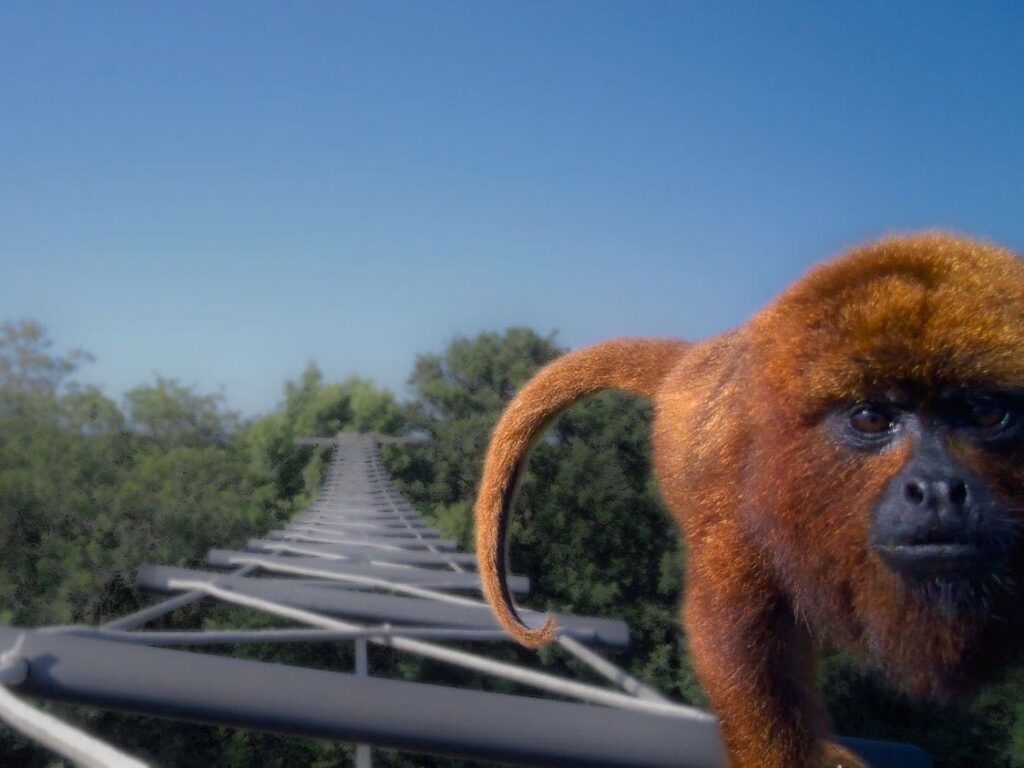
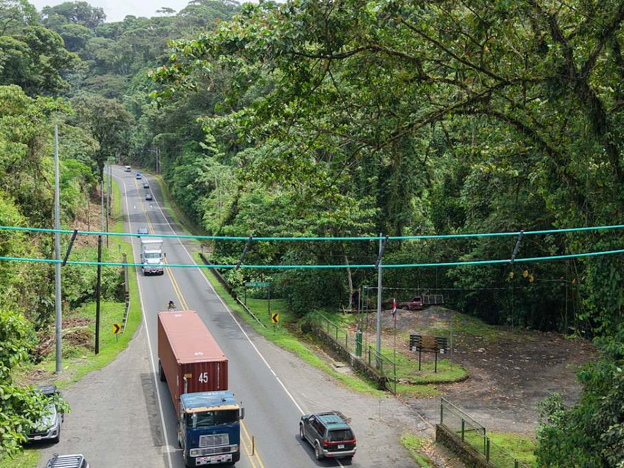
Busy roads can be both a barrier to movement and a major source of mortality for arboreal animals that live in the surrounding trees. One example is a section of Route 1 between Barranca and Limonal, Costa Rica, where 10 howler monkeys were struck by vehicles in 2022. Many roads in the country cut through dense forest, fragmenting the landscape and requiring arboreal species to drop to ground level to access habitat on the other side. But—thanks to a temporary canopy bridge that was installed while the road is being upgraded—the monkeys can safely shimmy across cables high above the road and its traffic.
Wildlife crossings are becoming a more widespread solution to reconnect fragmented habitats, keep animals on the move, and keep drivers safe. When looking to build new roads, it is ideal to completely avoid fragmenting habitat, but for existing roads, canopy bridges can be an effective mitigation measure.
In places like the Amazon rainforest and the country of Costa Rica, these crossings are designed for arboreal species that prefer to move through the treetops such as opossums, sloths, and monkeys. Canopy bridges are a specific type of wildlife crossing solution that bridges the gap in forest canopies created by roads or other barriers.
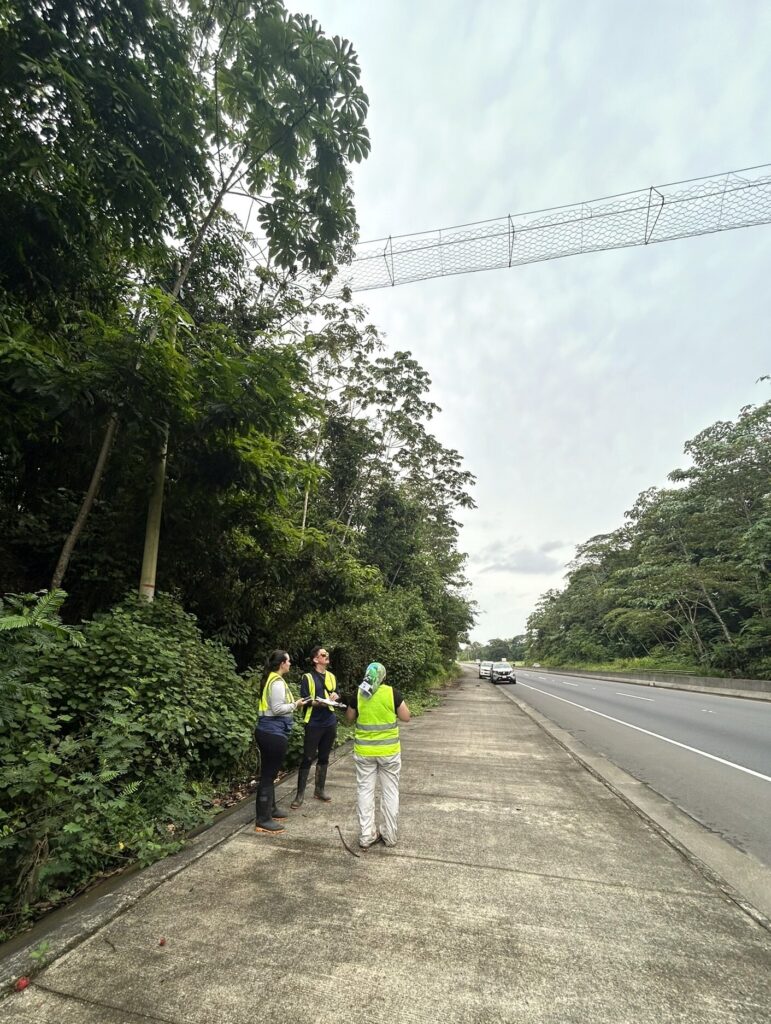
There are many different designs for these structures, which can consist of anything from a single line of durable material like thick rope to larger, rigid structures made of metal or concrete that can accommodate both arboreal and terrestrial species. Some are also made of recycled materials, such as old fire hoses or old electric cables. These simple designs are relatively inexpensive as compared to other types of wildlife crossing structures and easier to install.
Canopy bridges have been implemented in many countries worldwide, such as Costa Rica, Brazil, Malaysia, Indonesia, and India. The Center for Large Landscape Conservation is currently working with the Ministry of Public Works and Transportation of Costa Rica to launch a Mitigation Measures Manual for Wildlife Friendly Roads, with funding from the Development Bank of Latin America and the Caribbean (CAF), which will develop the nation’s first official guidelines to reduce wildlife-vehicle collisions and minimize the ecological impacts of roads. As part of this project, our team reviewed the existing types of canopy bridges in the country and in other places of the world to synthesize what has been working and identify best practices.
Below, we outline some of the different types of canopy bridge structures worldwide and provide examples of what types of species they serve.
Single-Line Aerial Crossings
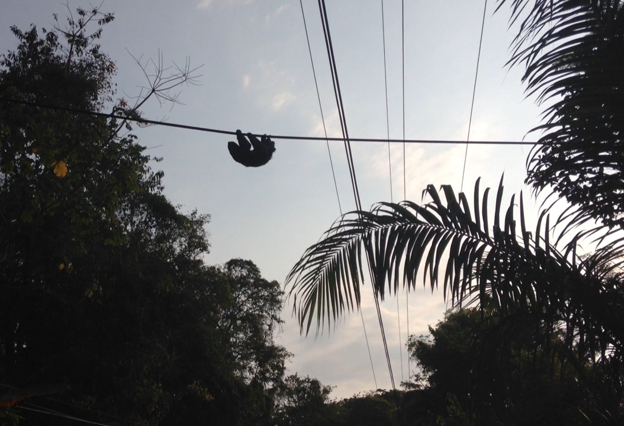
These are made of a single line of durable material like steel cable or rope. They are placed in areas of partial canopy cover, and the ends are anchored to sturdy trees, ensuring tension and stability. This design is suitable for a wide range of arboreal species from small rodents and opossums to sloths. Also, it is more applicable to narrow roads due to its limited rigidity over longer spans.
Two-Line Aerial Crossings
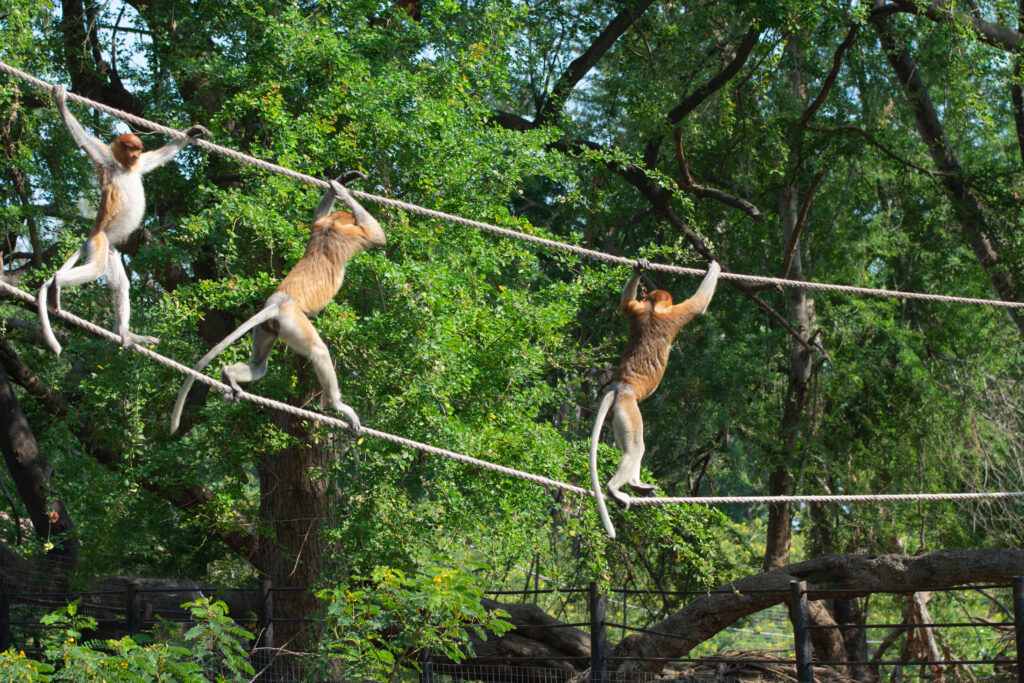
This type of canopy bridge is made with two lines of rope or cable and can be vertical or horizontal. Many arboreal animals with prehensile tails that function like a fifth limb, such as kinkajous, sometimes hold the second line with their tails to increase their balance while crossing. These structures are usually used for short distances of 20 meters or less and are anchored to trees or posts.
Vertical Ladder-type Aerial Crossings
Ladder-type canopy bridges have two anchor lines secured to trees or posts with connecting ties between the anchor lines to provide stability and support for the crossing. These are best utilized on roadways less than 30 meters wide.
Horizontal Ladder-type Aerial Crossings
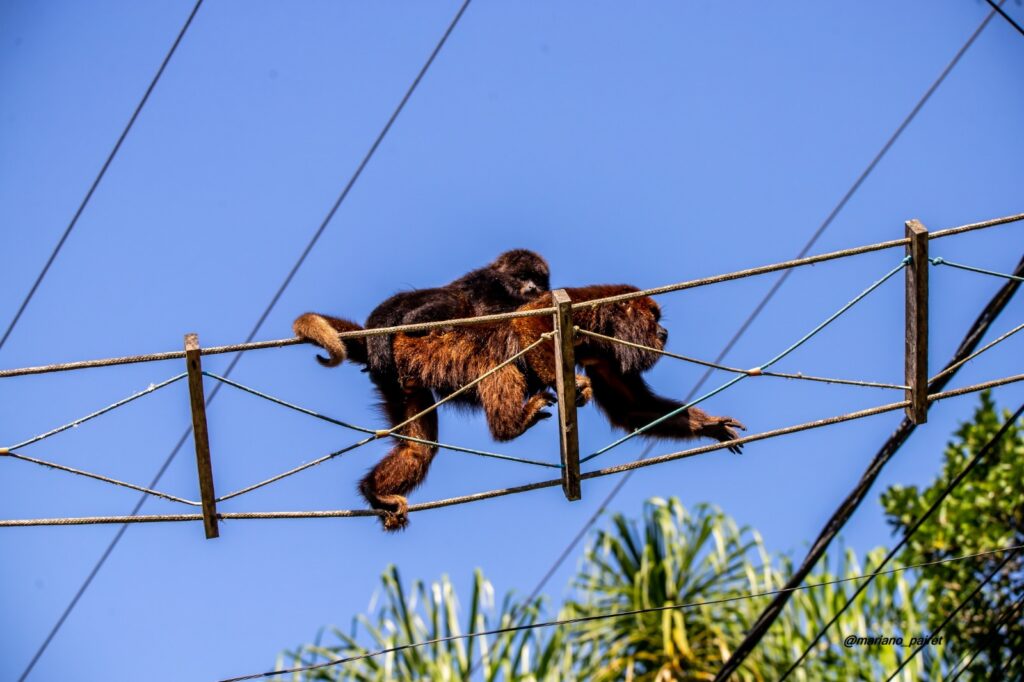
This type of crossing features a similar construction as the vertical ladder, but in a horizontal position. Larger arboreal animals that walk with four limbs such as howler monkeys use the ladder steps to move along the canopy bridge, but many smaller animals use only one of the exterior ropes to cross. These crossings can be anchored to trees or posts, as required by connectivity needs, tree types, or the presence of power lines.
Triangular Aerial Crossings
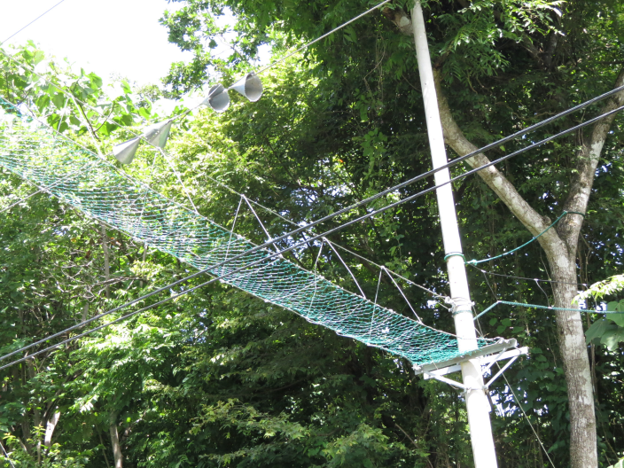
These crossings combine a horizontal ladder or net with a single cable at the top, forming a triangle. The bottom part is aimed at providing more stability to the crossing structure, while the upper line is for animals who use their tails for balance. These crossings are typically over 25 meters wide and usually feature two posts located on each side of roadways since they are heavier. When the canopy bridge is not directly fixed in a tree, they should be connected to the canopy by multiple ropes, so animals can access them.
Rigid Crossings
Rigid wildlife crossings (see video, below) are elevated structures that can be used by arboreal animals. They are typically comprised of metal or concrete frameworks designed to provide enhanced stability and durability.
Canopy bridges were first installed in various countries by conservation projects and community-based NGOs, and over the past few decades they have been implemented and monitored through numerous research initiatives. More recently, they are being recognized by transport agencies as an official mitigation measure to reduce the impacts of roads on arboreal animals. In Costa Rica, for example, canopy bridges are being officially installed by the Ministry of Public Works and Transport as part of recent road projects. They are also recognized as a complementary mitigation measure used by electric utility companies in areas where there is a risk of wildlife electrocution, alongside power line insulation and anti-climbing devices.
Monitoring studies have shown that canopy bridges are used by a wide variety of species, from possums, squirrels, and civets, to larger primates, such as howler monkeys and even orangutans, however, much remains to be learned about what is the best design for each species. More recently, researchers have been comparing different canopy bridge designs by implementing them side by side and comparing the frequency and behavior of species using them. Hopefully this new knowledge will help governments and communities increase the implementation this cost-effective solution for reducing the impact of roads on wildlife.
Top Photo: A brown howler monkey (Alouatta guariba) crosses a horizontal ladder canopy bridge over a road in southern Brazil. Credit: Precisa