Large Landscape News

Moving the Needle for Ecological Connectivity and Migratory Species

A recent global report delivered a stark warning: 49% of the 1,200+ unique species protected under the Convention on Migratory Species have declining populations, up from 44% two years ago. Confronting this newest evidence that birds, fish, insects, and mammals that cross national borders are increasingly at risk, government and conservation leaders gathered in late March for the 15th Conference of the Parties to the Convention on Migratory Species (CMS/CoP-15) in Campo Grande, Brazil. 

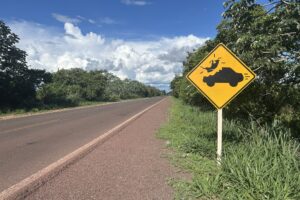
Report from the Field: A Road Trip of Wonder and Horror Along a Brazilian Highway

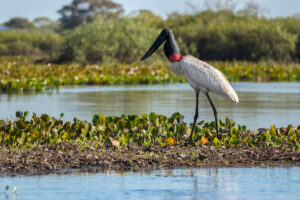
Known worldwide as an ecotourism destination for its rich biodiversity, the Pantanal biome is home to many of Brazil’s quirky and elegant, iconic species such as the feathery tailed, gentle-looking giant anteater, the stub-nosed, water-loving capybara (the world’s largest rodent!), and the tapir—a three toed ungulate with an elongated snout that is most closely related to the rhinoceros. But wildlife habitat in and around this vast, tropical landscape is gradually shrinking as land is cleared for production of some of the country’s biggest exports such as beef and soybeans. And wildlife movement is increasingly hampered by highways.

Connecting Across Borders in Central America

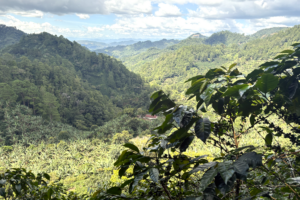
The Trifinio-Fraternidad Transboundary Biosphere Reserve (TFTBR) is a land of steep mountains covered by dense tropical forest, home to iconic species such as quetzal and puma, small cities and rural villages, and a thriving coffee-growing economy. Spanning parts of Guatemala, Honduras, and El Salvador, the TFTBR is a model in transboundary environmental governance, established primarily to safeguard vital water sources that originate in the mountains and flow to major population centers in all three countries. The Center for Large Landscape Conservation worked with UNESCO and partners in the TFTBR on the project “Scaling up Connectivity in the Trifinio-Fraternidad Biosphere Reserve” to strengthen habitat connectivity and landscape resilience in this richly biodiverse region.

From Yellowstone to Zambia: Protecting Safe Passage for Wildlife

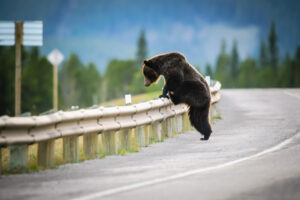
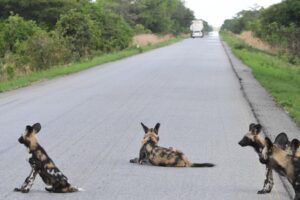
Yellowstone National Park in the western United States is a crucial landscape populated by iconic species like bison, wolves, grizzly bears, elk and pronghorn that are part of the largest concentration of wildlife in the lower 48 states. Kafue National Park in Zambia is, similarly, a stronghold of biodiversity and hosts elephants, lions, cheetahs, wild dogs, and antelope, which all roam the vast landscape. Despite being thousands of miles apart, Kafue and Yellowstone share similar challenges: major roadways cut through critical habitat and impact wildlife movement.

Honoring a Visionary: Celebrating Gary Tabor’s Conservation Legacy

The end of 2025 marked the end of an era for the Center for Large Landscape Conservation. On December 31, CLLC’s visionary founder Gary Tabor retired as CEO. He established the organization based on the unwavering conviction that climate change and biodiversity loss were inextricably linked and must be addressed by not only conserving but also connecting habitat at the large-landscape scale. 

Saving the Spaces in Between: CLLC Promotes International Collaboration for Connectivity

Some of the greatest success stories in conservation are the creation of formally protected areas of land and water such as national parks and reserves. While essential to conserving nature around the world, these areas alone can’t sustain biodiversity if they are isolated patches surrounded by people and infrastructure. Wildlife, especially migratory and wide-ranging species, need connected habitats to find food, water, and mates and adapt to climate change. Safeguarding the natural corridors and movement routes between protected areas forms the basis of connectivity conservation. Yet these critical linkages are increasingly threatened by rapid development and mounting human pressures.

Center for Large Landscape Conservation Announces Brendan Moynahan as New CEO

Today, Dr. Mary Pearl, Board Chair of the Center for Large Landscape Conservation (CLLC), announced that Brendan Moynahan will become the next CEO of CLLC in January 2026, succeeding founder and CEO Gary Tabor. Moynahan is Chief, Wildlife Conservation Branch, National Park Service and a nationally recognized leader in wildlife science, conservation, and policy.

Collaboration in Action: CLLC at the World Conservation Congress

Species extinction… climate change… increasing pollution. There’s no denying our planet is in crisis. So how do we to avert ecosystem collapse and secure the health and well-being of all life on Earth? Held every four years, the IUCN World Conservation Congress (WCC) brings together thousands of conservation leaders to reach consensus on saving the environment and harnessing nature to solve pressing global challenges.

Connecting Communities and Wildlife: A Local Planning Guide

Wildlife don’t stop at city limits, county lines, or property boundaries—and neither should local government planning. The decisions communities make today about how and where to build will shape whether future generations inherit thriving landscapes that sustain people and wildlife alike. That’s why CLLC created a new report on wildlife habitat connectivity and local government: to bring together the policy tools and practical strategies that every community and every community member—whether you’re a resident, planner, biologist, developer, or legislator—can consider using to help keep landscapes connected.  

Designing Infrastructure With Snow Leopards in Mind

With complex, sprawling ranges across the high mountains of South and Central Asia and low population densities, snow leopards are an elusive species. Over the last decade, however, urban centers and communities surrounding their habitats have become increasingly connected, with many more investments in infrastructure on the horizon. How can new linear infrastructure—including roads, railways, and power lines—meet human needs while protecting snow leopards, their prey, and the fragile ecosystems they depend on to survive?

Stay informed

Join our email list for news and updates.

Subscribe