Some of the greatest success stories in conservation are the creation of formally protected areas of land and water such as national parks and reserves. While essential to conserving nature around the world, these areas alone can’t sustain biodiversity if they are isolated patches surrounded by people and infrastructure. Wildlife, especially migratory and wide-ranging species, need connected habitats to find food, water, and mates and adapt to climate change. Safeguarding the natural corridors and movement routes between protected areas forms the basis of connectivity conservation. Yet these critical linkages are increasingly threatened by rapid development and mounting human pressures.
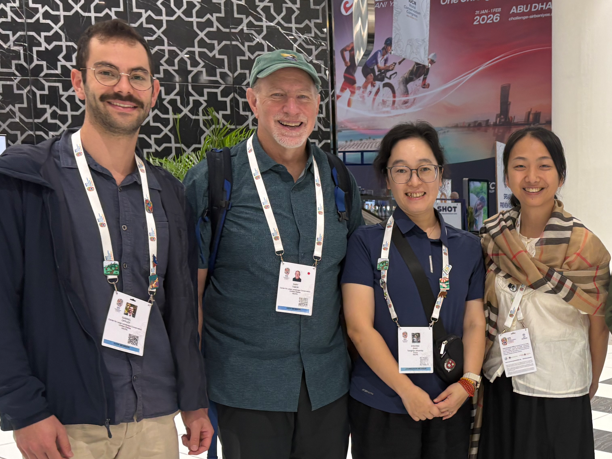
This growing recognition that connecting protected areas is key to stemming biodiversity loss has been fueled in large part by dedicated professionals collaborating in the Connectivity Conservation Specialist Group (CCSG). The CCSG was established in 2016 under the IUCN World Commission on Protected Areas (WCPA) CCSG’s mission to serve as the global hub providing scientific, policy, and technical advice that mainstreams connectivity conservation as a nature-based solution to enhance the integrity of protected areas, save biodiversity, and increase resilience to climate change across all lands and waters.
While international in scope, composed of 1200+ volunteer members from 125+ countries, much of the CCSG’s day-to-day coordination is conducted from the offices of the Center for Large Landscape Conservation (CLLC) based in Bozeman and Missoula, Montana, in the United States.
CLLC has served this role as the “Secretariat” of CCSG since its inception, acting as the group’s central administration and providing crucial coordination, communication, and logistical support to the growing network of volunteer connectivity conservation experts around the world. Staff members also play leading roles in the Specialist Group and its working groups.
Connectivity Conservation Leadership
Center for Large Landscape Conservation founder and CEO Gary Tabor was the CCSG’s first Chair and has served for the last eight years with Deputy Chair Jodi Hilty, President and Chief Scientist at the Yellowstone to Yukon Conservation Initiative. Both Tabor and Hilty recently reached the leadership term limit allowed by WCPA and are passing the torch to three new Co-chairs.
“I am proud to have inspired and supported the ambitions of this wonderful, growing community,” Tabor said in a message to the CCSG membership. “And now, as I leave and take on the new sage role of Senior Advisor, I congratulate you all on our numerous achievements and look forward to seeing our new cohort of leaders continue to build upon them.”
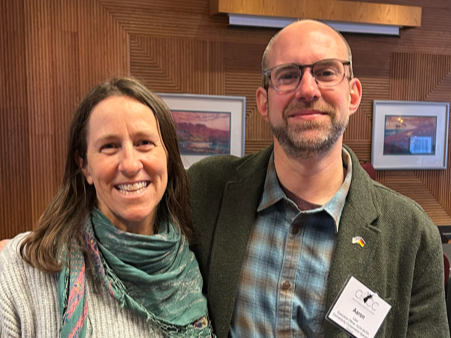
WCPA Chair Madhu Rao has selected three new co-chairs: Aaron Laur from the Center for Large Landscape Conservation in Bozeman, Montana, USA; Jordan Reeves from the Yellowstone to Yukon Conservation Initiative, also in Bozeman; and Zhicong Zhao from the Institute for National Parks at Tsinghua University, Beijing, China.

CLLC’s Laur assumes the role of Co-chair after nearly 20 years of experience in international conservation that has always had a focus on contributing to and advancing the mission of IUCN.
When asked about his hopes for the future as he steps into the role of Co-chair, Laur said, “I look forward to working with fellow Co-Chairs to build on the outstanding example set by IUCN’s and CCSG’s pioneering leadership fostering innovation, collaboration, and a dedicated community that has inspired a fully-fledged worldwide movement for connectivity conservation. Together, CCSG will seize the momentum it has generated in science, policy, and practice to support each other and partners around the world to more efficiently and effectively conserve nature at large, connected scales.”
The Co-chairs will now lead CCSG into its next, exciting chapter. They will govern the group membership, guide its strategic direction, foster inclusivity and collaboration, and continue supporting the development of knowledge products, tools, and policy advice. Leadership will also include representing the Specialist Group across IUCN and coordinating members for local to global gatherings, including the World Conservation Congress.

CCSG’s Global Impact
CCSG is one of IUCN WCPA’s most active Specialist Groups. Thanks to its dedicated members, connectivity conservation has moved from an outlier to the mainstream of conservation. Among many collaborative activities, its efforts are the basis for Canada’s National Program for Ecological Corridors, Asian Elephant range states prioritizing connectivity and wildlife-friendly linear infrastructure, and establishment of the Global Partnership on Ecological Connectivity.
Furthermore, thanks to the leadership of this group, connectivity is now embedded in several global conservation agreements, including the Convention on Biological Diversity’s Kunming-Montreal Global Biodiversity Framework (KMGBF) for 2030 and beyond.
Developing Conservation Tools and Guidance
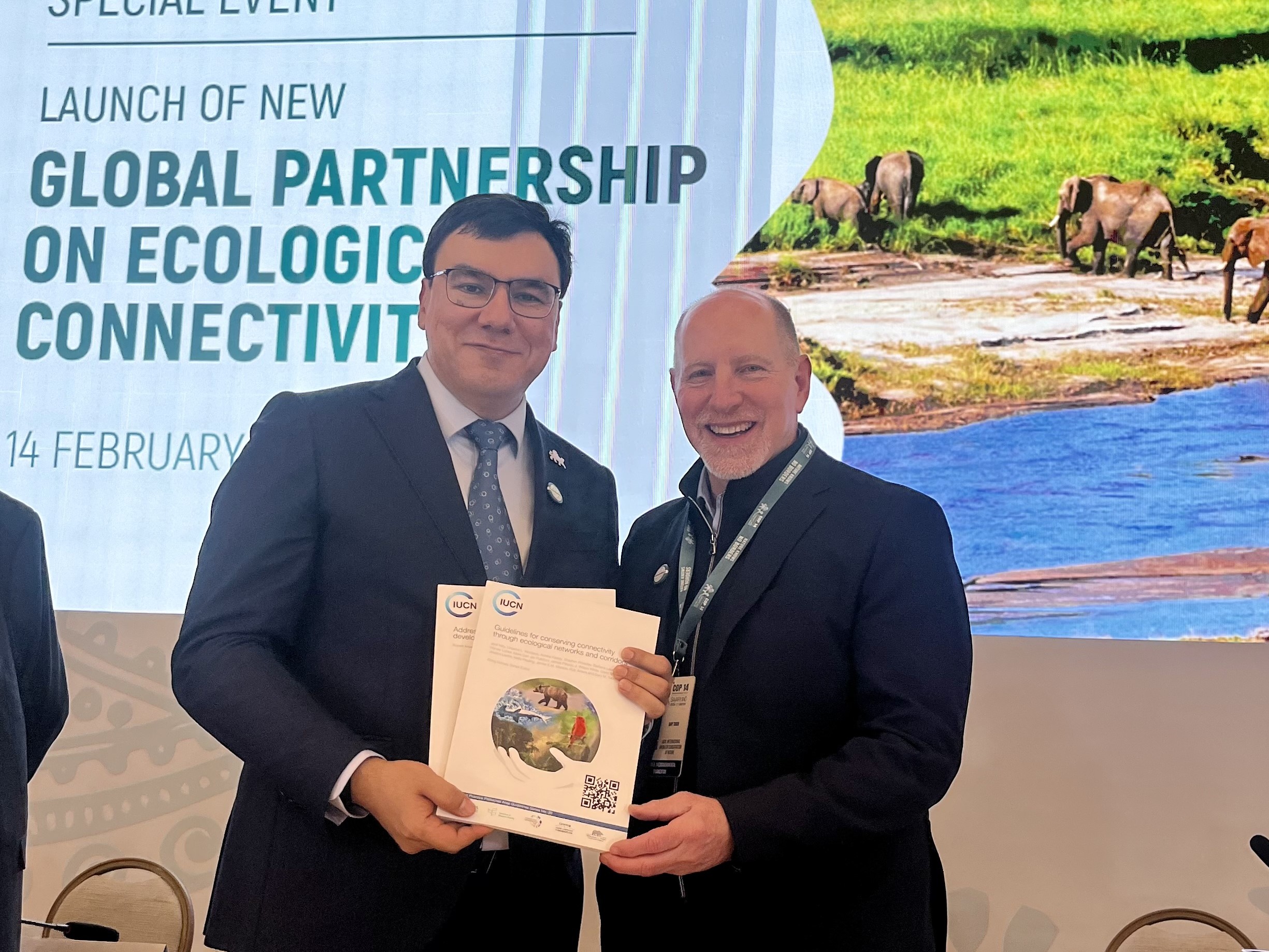
CCSG Members have produced dozens of peer-reviewed papers, technical reports, and guidance documents to help inform and guide connectivity conservation worldwide. Among the largest collaborative efforts are IUCN’s groundbreaking Guidelines for conserving connectivity through ecological networks and corridors and Technical Report Addressing ecological connectivity in the development of roads, railways and canals.
Behind the scenes, CLLC staff members Laur and Gabriel Oppler have shepherded many of these publications from concept through completion by editing, facilitating reviews, overseeing photos and layout, and navigating all official manuscripts through the IUCN approval processes.
Key to making the work of the CCSG available to all, its website features ongoing projects and activities along with a sizable resource library and digests synthesizing the latest news, science, and policy surrounding connectivity conservation.
What’s ahead for CCSG
Recent adoption of IUCN Resolution WCC-2025-Res-126, Recognising and Reporting Ecological Corridors, provides a strong mandate for CCSG and its working groups to lead coordination and collaboration over the next four years. Priorities will include advocating for an authoritative international definition and frameworks to delineate and manage ecological corridors; applying the IUCN Connectivity Guidelines globally to strengthen consistent corridor design, governance, monitoring, and implementation; launching the World Database on Ecological Corridors to improve tracking and reporting; and encouraging sustained funding and investment for long-term corridor conservation.
CCSG will also continue implementing IUCN Resolution WCC 2020 Res 071, Wildlife-friendly linear infrastructure, to address fragmentation caused by transport infrastructure through cross-sector collaboration. In parallel, the group will contribute to preparations for CMS CoP-15 (2026 in Brazil), CBD CoP-17 (2026 in Armenia), and the World Protected and Conserved Areas Congress (2027 in Panama).
Top photo: CCSG Outgoing Deputy Chair Jodi Hilty (far left) and Outgoing Chair Gary Tabor (second from right) with the team from CLLC in Romania in 2019. (credit: CLLC)