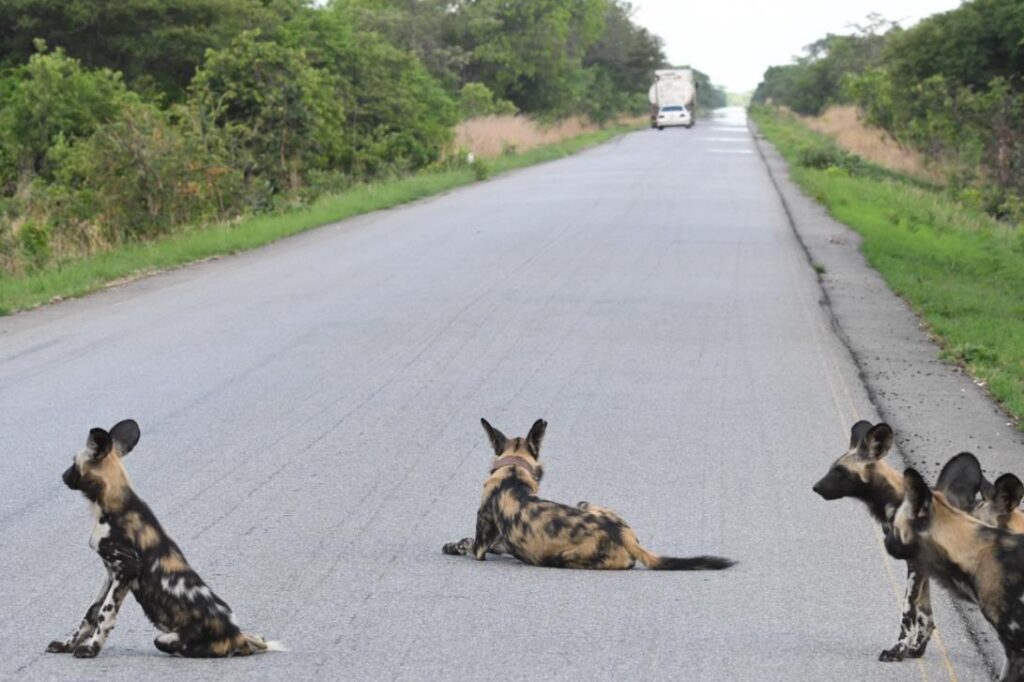
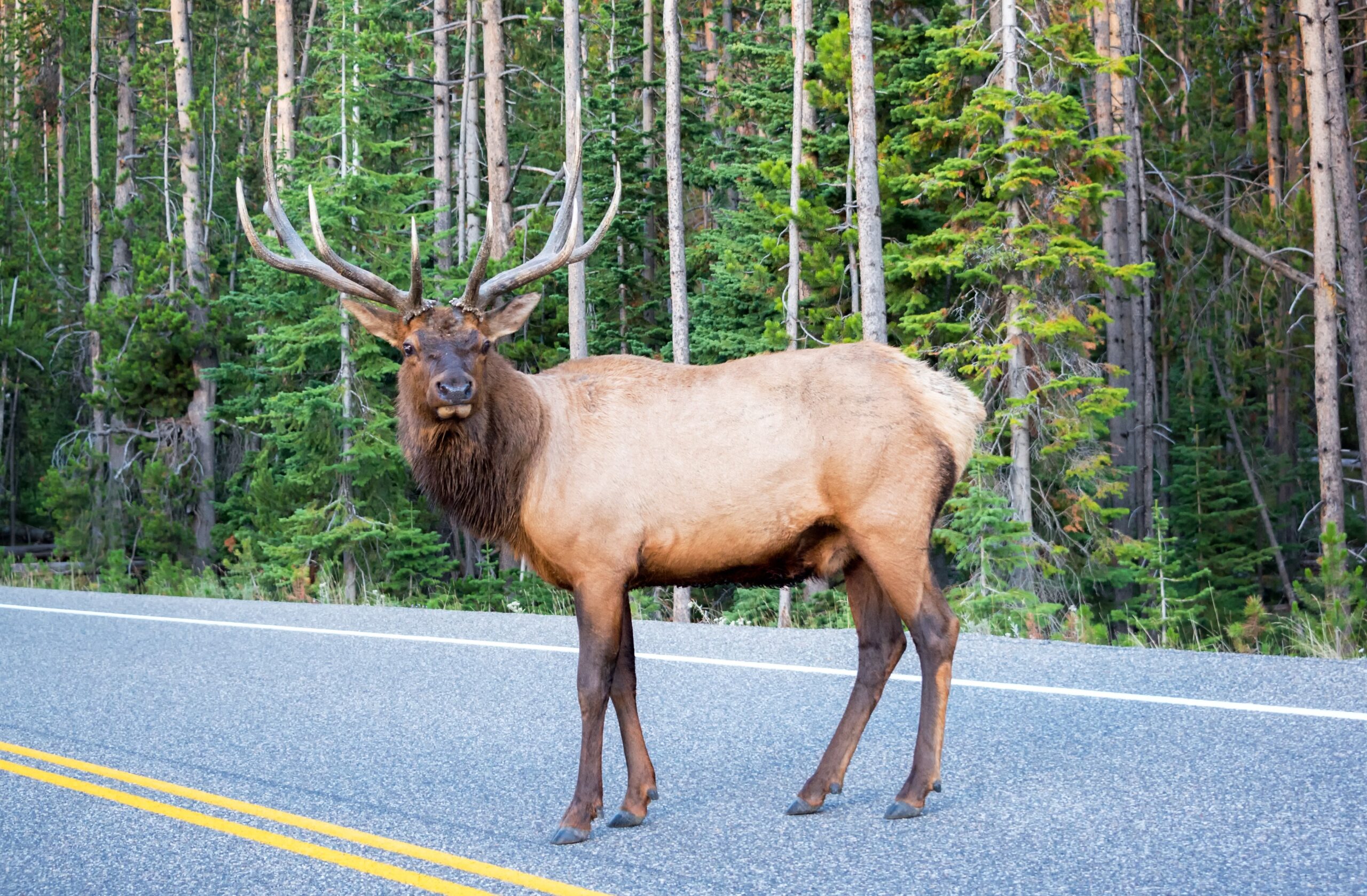
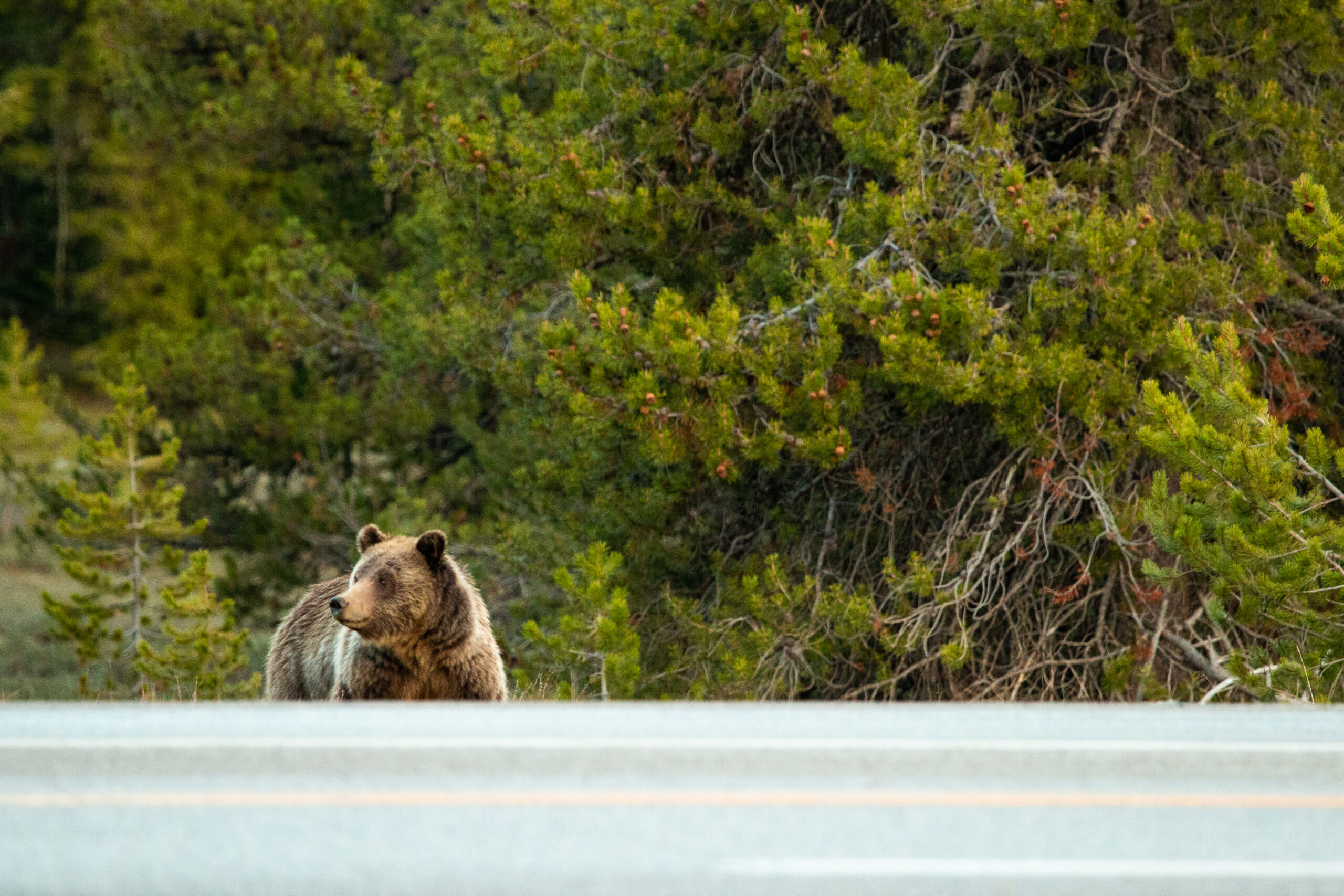
Yellowstone National Park in the western United States is a crucial landscape populated by iconic species like bison, wolves, grizzly bears, elk and pronghorn that are part of the largest concentration of wildlife in the lower 48 states. Kafue National Park in Zambia is, similarly, a stronghold of biodiversity and hosts elephants, lions, cheetahs, wild dogs, and antelope, which all roam the vast landscape.
Despite being thousands of miles apart, Kafue and Yellowstone share similar challenges: major roadways cut through critical habitat and impact wildlife movement. Growing traffic volume, speed, and through-traffic intensify these impacts, increasing the risk of wildlife-vehicle collisions, impacting movement patterns and fragmenting vital wildlife corridors. As a result, animals are often forced to cross dangerous roads to access food, water, and seasonal ranges—putting both wildlife and people at risk.

CLLC has completed highway assessments alongside our partners in the Greater Yellowstone Ecosystem (GYE)—encompassing Yellowstone National Park and surrounding public and private lands in Montana, Wyoming and Idaho—and Kafue National Park to better understand the impact of these roads on wildlife and what we can do to mitigate those impacts.
In 2021, a team of scientists including CLLC staff members conducted the US-191/MT-64 Wildlife & Transportation Assessment, gathering local and expert knowledge, public data, citizen science, and engineering expertise to identify 11 priority sites where mitigation measures—such as culverts, bridges, underpasses, overpasses, animal detection systems, and fencing—can improve the safety of roads for travelers and wildlife.
“In some places, the topography lends itself better to an overpass versus an underpass,” said Elizabeth Fairbank, road ecologist with the Center. “There’s lots of recommendations for things like bridge retrofits or reconstructing a bridge at the end of its lifespan with a much larger structure, and that can benefit not only terrestrial wildlife, but also river and stream health.”
Fairbank says that a crossing structure with fencing is the gold standard to reduce wildlife-vehicle collisions by 80 to 90 percent while still maintaining habitat connectivity for wildlife but they’re not appropriate or feasible everywhere due to engineering or financial constraints or if the species of concern does not easily use crossing structures.
In the GYE, many of the iconic species that live in the park are wide-ranging and make use of public and private lands around the park, crossing roads like US-191 and navigating other human infrastructure like fencing to do so.
“Migratory species, like elk, are having to cross busy highways in the GYE seasonally, every year,” Fairbank said. “It’s a major issue impacting their ability to reach the resources that they need like food, water, shelter and mates to survive.”
Elk that have been struck by vehicles are an all-too-common sight on US-191, something that CLLC is trying to change with efforts to advance crossings in an elk collision hotspot—one of the priority sites identified in the assessment. The assessment has led directly to tangible plans to build a wildlife overpass and underpass at this location.
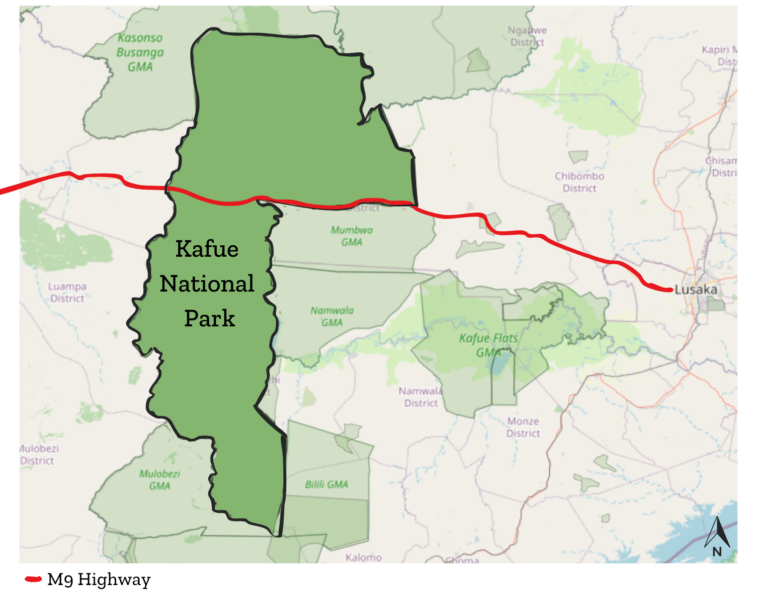
In Kafue National Park, the M9 highway that bisects the park presents a similar barrier to wildlife looking for water, food and mates. CLLC staff members traveled to Zambia in April 2024 to launch a comprehensive assessment of the highway in the park with the Zambian Carnivore Programme (ZCP) and Greater Kafue Landscape Ltd. (GKLL), a joint venture of Zambia’s Department of National Parks and Wildlife (DWNP) and African Parks (AP).
The project’s aim was to understand exactly where and how the M9 is putting wildlife at risk. For example, the assessment data showed that wildlife-vehicle collisions and wildlife activity are concentrated where the road passes by water sources.
“It’s important to keep track of the road’s negative impacts on the wildlife populations, and to be able to provide concrete, science-backed recommendations for how to reduce those impacts for both wildlife and people,” said Dr. Catherine Sun, Senior Quantitative Ecologist with the ZCP who worked on the project.
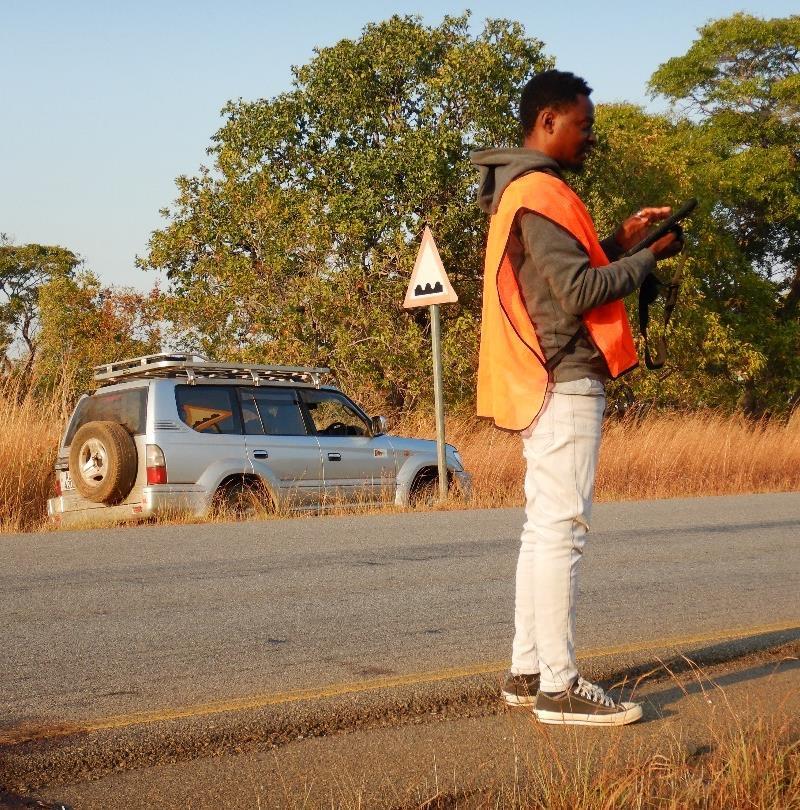
According to Fernanda Teixeira, Linear Infrastructure Ecology Advisor with CLLC, the methodology for this assessment was very similar to that of the assessment completed in the GYE. Using a combination of citizen science, wildlife surveys, roadkill data and collaring, many layers of data were combined to pinpoint priority sites along the M9 where mitigation actions should be designed and implemented.
Some of the immediate priorities identified include speed reduction and control backed by the presence of law enforcement. Some longer-term actions include relocating water sources formed during construction activities away from the road and restricting nighttime truck traffic. If these measures are introduced, they will have the potential to reduce wildlife mortality, enhance wildlife movement and improve road safety.
“Kafue is a huge national park with lots of important species like elephants, lions, cheetahs, and wild dogs,” Teixeira said. “But, the reality is, persistence of the wildlife populations in the region is not guaranteed because these animals are being killed on a road within the park.”
The Zambian government has long known that the M9 has had an impact on Kafue wildlife populations. The new report helped them to narrow down where to implement speed reduction measures on the M9 to have the most impact. While this alone will not prevent collisions, it is a good first step in a longer-term effort.
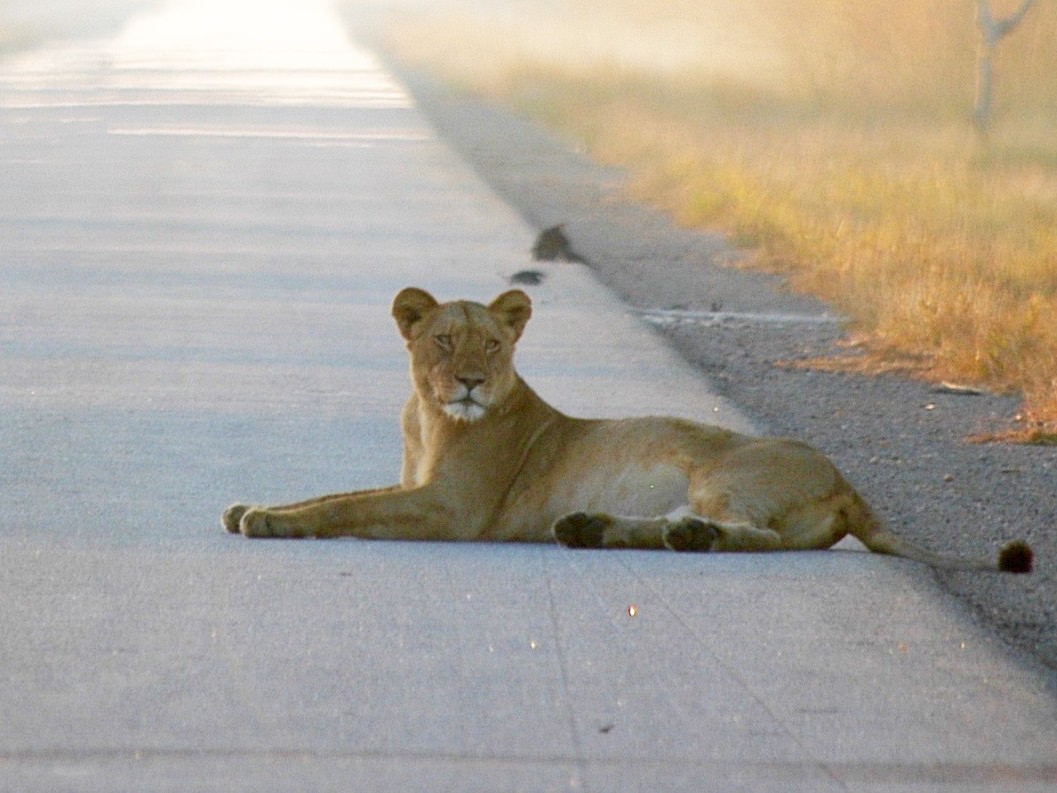
“This study has been an incredible project, and we are hoping to continue monitoring roadkill on the M9 with a systematic approach,” Sun said. “Long-term monitoring reveals a wealth about how wildlife persists on the landscape, sometimes in relatively wild habitat but also in places with increasing human impact. Being able to track the patterns and responses of wildlife through time is critical to providing effective conservation.”
CLLC will continue working in both locales on future monitoring efforts to assess the effectiveness of mitigation measures that have been implemented and support the establishment of more crossings to provide safe passage for people and wildlife alike.
Top photo: African wild dogs in the road, Kafue National Park – Credit: Zambian Carnivore Programme