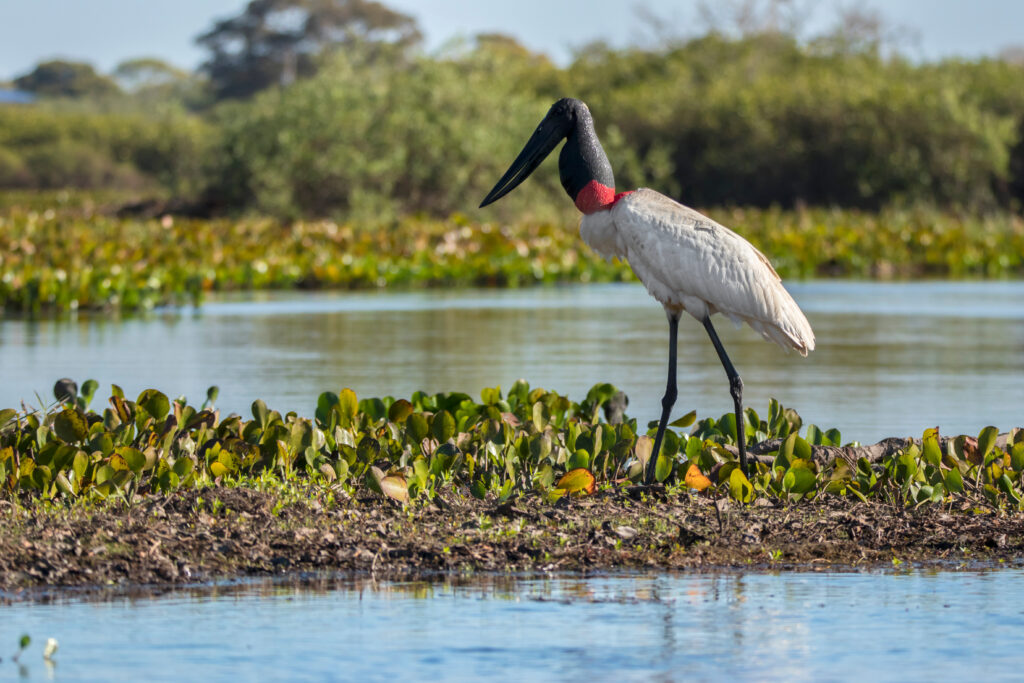
Highlights from the Convention on Migratory Species CoP-15
A recent global report delivered a stark warning: 49% of the 1,200+ unique species protected under the Convention on Migratory Species have declining populations, up from 44% two years ago. Confronting this newest evidence that birds, fish, insects, and mammals that cross national borders are increasingly at risk, government and conservation leaders gathered in late March for the 15th Conference of the Parties to the Convention on Migratory Species (CMS/CoP-15) in Campo Grande, Brazil.
These multilateral governmental negotiations, convened under the theme “Connecting Nature to Sustain Life,” reinforced the critical need to conserve the ecological connectivity of our globally shared natural heritage of migratory species. Linking ecosystems, cultures, and economies across country borders and continents, wild species undertake increasingly perilous journeys throughout their lifecycles.
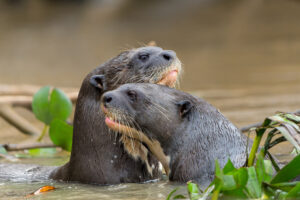
Participants at CoP-15, including the Center for Large Landscape Conservation, demonstrated resolve by adopting commitments to address compounding threats to the survival of migratory species. This included agreeing on new or enhanced international protections for 40 species in danger of extinction such as the cheetah, snowy owl, giant otter, and great hammerhead shark. Read the full list of species here.
Throughout the week, participants also addressed more than 100 agenda items ranging from illegal and unsustainable taking of migratory species to impacts of deep sea mining. By close of CMS/CoP-15, Parties also adopted a diversity of policies to address threats and implement actions with a strengthened focus on ecological connectivity, international cooperation, and expanding partnerships.
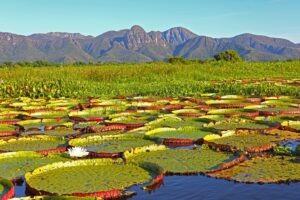
Campo Grande provided a fitting backdrop for this meeting of the world’s only international agreement recognizing countries as the stewards of migratory species living within or passing through their national jurisdictions. As the capital of the state of Mato Grosso do Sul in southwestern Brazil, it is the southern gateway to the Pantanal—the world’s largest tropical wetland—at the intersection of Brazil, Bolivia, and Paraguay. This landscape supports more than 1,000 bird, 300 mammal, 500 reptile, 400 fish, and thousands of invertebrate species. It is one of the most biodiverse regions on Earth and a powerful example of the importance of connected, functional ecosystems and why the work of the Convention on Migratory Species matters so much.
High-level Commitment for Wildlife
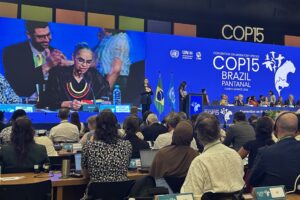
An ambitious tone was set at the preceding High Level Segment chaired by Brazilian President Luiz Inácio Lula da Silva who was joined by the President of Paraguay, ministers, and other stakeholders. Together, these country representatives adopted the Pantanal Declaration “Promoting Connectivity to Protect Migratory Wildlife.” It highlights the need to maintain, enhance, and restore ecological connectivity; include measures to prevent negative impacts on migration routes in economic development strategies; and use available resources to support developing countries to more effectively conserve migratory wildlife.
The importance of the Convention and key role of ecological connectivity was highlighted by President Lula:
“The Convention on Migratory Species conveys a simple but powerful message: migration is natural. By crossing continents and connecting distant ecosystems, these species show that nature does not recognize the limits between States. The jaguar moves across nearly all preserved territories of the Americas in search of safe areas to hunt and reproduce. Like it, every year, millions of birds, mammals, reptiles, fish, and even insects cross continents and oceans. These journeys connect ecosystems, preserve natural cycles, and ensure the balance that makes life possible. Protecting these animals means protecting life itself on the planet. The survival of these species depends on collective action.”
During his address, President Lula also announced Brazil’s newest conservation commitments including the creation of a the new Córregos dos Vales do Norte de Minas Gerais Reserve, and significant expansions of Pantanal National Park and Taiamã Ecological Station, together representing approximately 145,000 hectares (559 square miles) of newly protected lands.
CLLC’s Ongoing Leadership
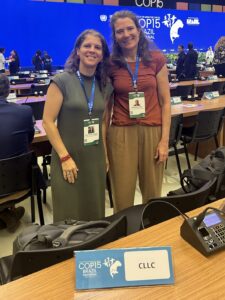
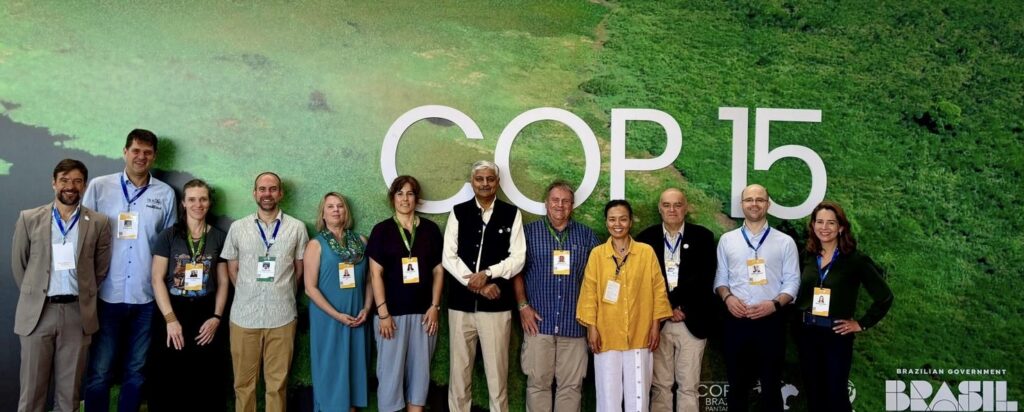
Joining more than 2,000 attendees, including delegates from 105 of the 133 country “Parties” to the Convention on Migratory Species, the Center for Large Landscape Conservation was represented by three team members: Katie Deuel (Chief Program Officer), Aaron Laur (Manager, International Connectivity Program), and Fernanda Teixeira (Linear Infrastructure Ecology Advisor).
As an official NGO Observer to CMS, the Center continued advancing the aims of the convention by emphasizing the fundamental importance of conserving ecological connectivity to more efficiently and effectively achieve the great diversity of international treaty agreements for conserving nature. In preparations and over the course of the conference, the team contributed expertise and worked with partners to showcase innovative collaboration for maintaining, enhancing, and restoring ecological connectivity to conserve migratory species.
Over the course of the conference, Katie, Aaron, and Fernanda followed negotiations, shared expertise through presentations, and participated in official events especially promoting leading joint efforts focused on conserving migratory species, their habitats, and migration routes. Aaron, who also serves as Co-Chair of the IUCN World Commission on Protected Areas (WCPA) Connectivity Conservation Specialist Group (CCSG), represented the World Commission on Protected Areas as part of IUCN’s official delegation throughout the negotiations and associated events.
Official Side Events Promoting Collaboration
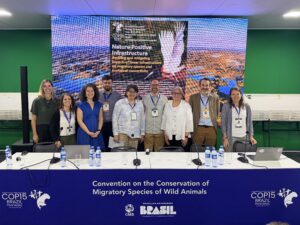
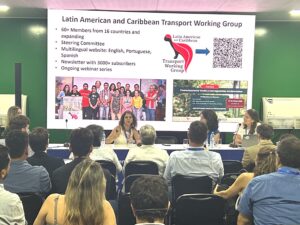
Among the nearly 60 official side events held in Campo Grande, CLLC was proud to lead co-organization of the event “Nature Positive Infrastructure – Avoiding and mitigating impacts of linear infrastructure on migratory species and ecological connectivity” with numerous partners. Participants learned about new and expanded initiatives around the world building capacity and mobilizing resources to mainstream biodiversity conservation into infrastructure policy, planning, investment, and development.
Additionally, the Center contributed to back-to-back events emphasizing the growing, collaborative action that is being scaled up by the Global Partnership on Ecological Connectivity (GPEC) titled “Ecological Connectivity: A Cross-Cutting Solution for Achieving Multiple Environmental and Socio-Economic Priorities” and “From Partnerships to Practice: Advancing ecological connectivity action on the ground”.
Toward the end of the conference, Aaron was moderator for the event Bridging the gap: Leveraging animal movement and mapped migration corridors to inform national conservation policy” that provided insights into how movement data, with a focus on migration, can be better integrated into conservation planning and policy.
Renewed Policies for Connectivity and Addressing Impacts of Infrastructure
As part of formal negotiations, Parties considered a raft of background documents, reaching consensus by the last day to adopt new and updated policy resolutions and decisions about a diversity of issues and topics. Specific to the Center’s mission, the Resolution on “Ecological Connectivity” advances previous related commitments urging Parties to identify, strengthen, and expand ecological networks and corridors to conserve migratory species, and for the CMS Secretariat to support their establishment and management.
Additionally, the “Resolution on Impact Assessment and Migratory Species” advances commitments that migratory species, their habitats, and ecological connectivity “[…] be given high priority in biodiversity-related aspects of environmental impact assessment”
Looking Ahead
João Paulo Ribeiro Capobianco, in his role as President of CMS/CoP-15, and as Executive Secretary at the Ministry of the Environment and Climate Change, made the closing speech, including the following statement:
“From the Pantanal to the Arctic, from the oceans to the savannas, migratory species connect our planet in ways no political map ever could. They remind us that ecological integrity depends on continuity of flows that must remain alive, uninterrupted, and resilient. And this is precisely what is at stake. Connectivity is not an abstract concept. It is the difference between survival and collapse. Between ecosystems that function and those that fail. To protect migratory routes, ecological corridors, and critical habitats is to protect the very fabric of life on Earth.”
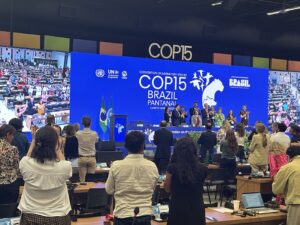
The outcomes of CMS/CoP-15 represent meaningful and durable progress in the global effort to conserve ecological connectivity for migratory species and the ecosystems they depend upon. For the Center, CMS/CoP-15 reaffirmed that bringing high quality science, field experience, partnerships and networks, and technical expertise to negotiations and side events shapes innovative and actionable decisions. We look forward to building on these outcomes in the months ahead, in collaboration with our many valued partners.
Additional information:
*Photo of presenters, left to right: Fernanda Abra (President, Reconecta Institute); Fernanda Teixeira (Linear Infrastructure Ecology Advisor, Center for Large Landscape Conservation); Tremaine Gregory (Senior Scientist, Sustainable Infrastructure Team, WWF-US); Steffen Mumme (Spatial Ecologist, Global Initiative on Ungulate Migration); Ruth Tiffer Sotomayor (Senior Environmental Specialist, Global Environment Department, The World Bank); Aaron Laur (Manager, International Connectivity Program, Center for Large Landscape Conservation); Kate Newman (Vice President, Sustainable Infrastructure and Public Sector Initiatives, WWF-US); Duncan Lang (Principal Environment Specialist, Nature and Environment Division, Asian Development Bank); and Katie Deuel (Chief Program Officer, Center for Large Landscape Conservation).
Top image: The Jabiru stork (Jabiru mycteria), locally known as the tuiuiú, is a symbol of the Pantanal in Brazil. Adobe Stock photo.